
KNX Networks & Topology
TP line topology rules, KNXnet/IP routing and IP backbone design — how KNX integrators structure networks for residential, commercial and multi-building installations.
KNX TP Topology: Lines, Areas, Backbone and Line Couplers
KNX TP topology is hierarchical and deterministic. This guide covers the 3-level address structure (X.Y.Z), physical line limits (64 devices, 350m, 640mA), line couplers vs repeaters, IP area couplers, power supply sizing and the most common commissioning mistakes.
KNXnet/IP Routing: IP Interfaces vs IP Routers Explained
KNXnet/IP connects KNX TP to IP networks for remote programming, visualisation access and multi-line installations. IP interface and IP router are completely different devices — this guide explains tunneling vs routing, MDT SCN-IP200.02, Weinzierl 730, KNX Secure and remote VPN access.
IP Backbone Design for Large KNX Installations: VLANs and QoS
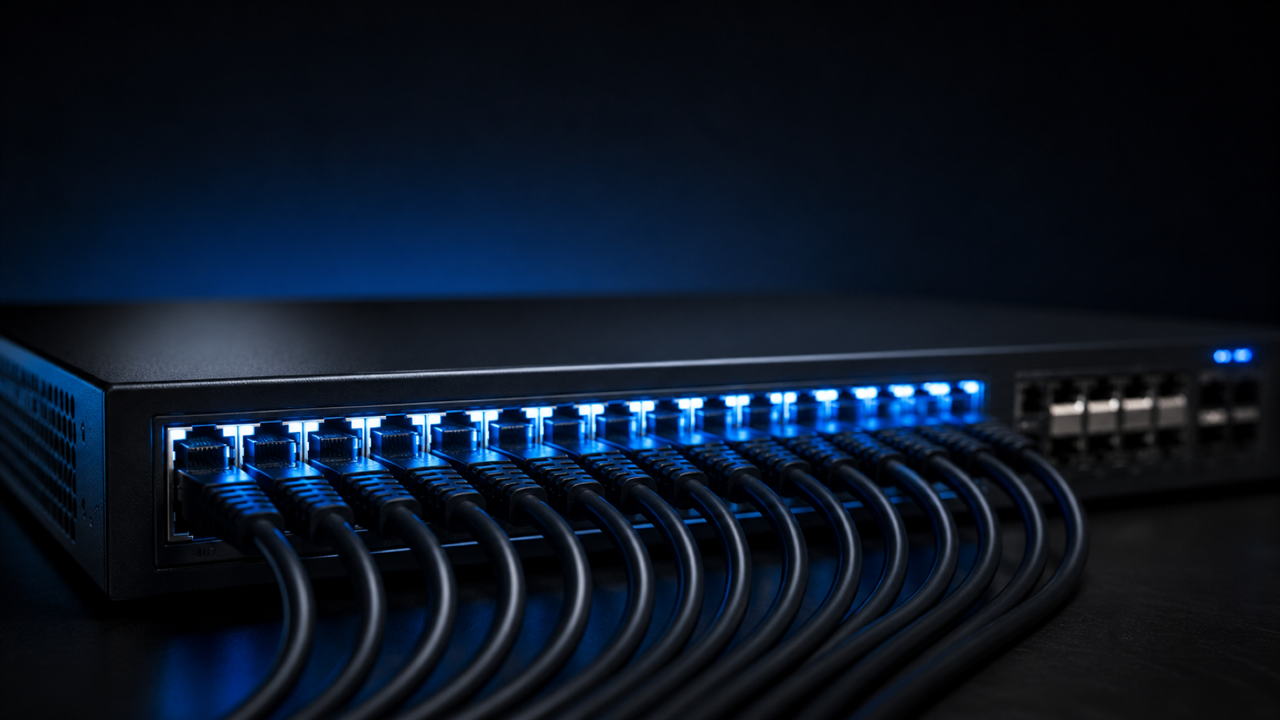
For installations with more than 3 KNX TP lines or multi-building campuses, an IP backbone connects KNXnet/IP routers via standard Ethernet. This guide covers VLAN isolation, DSCP QoS, IGMP snooping, managed switch selection and a worked example for an 8-floor office building.
Multi-line KNX network design
We design scalable KNX installations from single-line apartments to 10+ line commercial buildings — including IP backbone architecture, VLAN design and QoS configuration.
Request a quote →